
Toyota 3M Model
Toyota 3M Model Explained: How Eliminating Muda, Mura, and Muri Drives Lean Excellence
Why Lean Fails Without Addressing the 3Ms
Many organizations start Lean initiatives with good intentions—cut waste, improve flow, reduce cost. Yet results stall because teams focus on visible waste (Muda) and ignore two equally damaging forces: Mura (unevenness) and Muri (overburden). Toyota’s 3M Model—Muda, Mura, Muri—is a simple but powerful lens to diagnose why processes underperform and how to fix them systemically.
The Toyota 3M Model: A Quick Overview
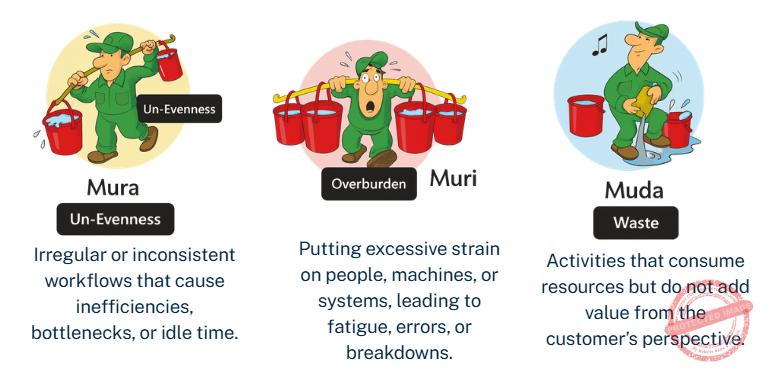
The 3M Model originates from the Toyota Production System and highlights three root conditions that degrade performance:
- Muda (Waste): Non–value-adding work
- Mura (Unevenness): Variability and inconsistency in demand or workload
- Muri (Overburden): Pushing people or machines beyond reasonable limits
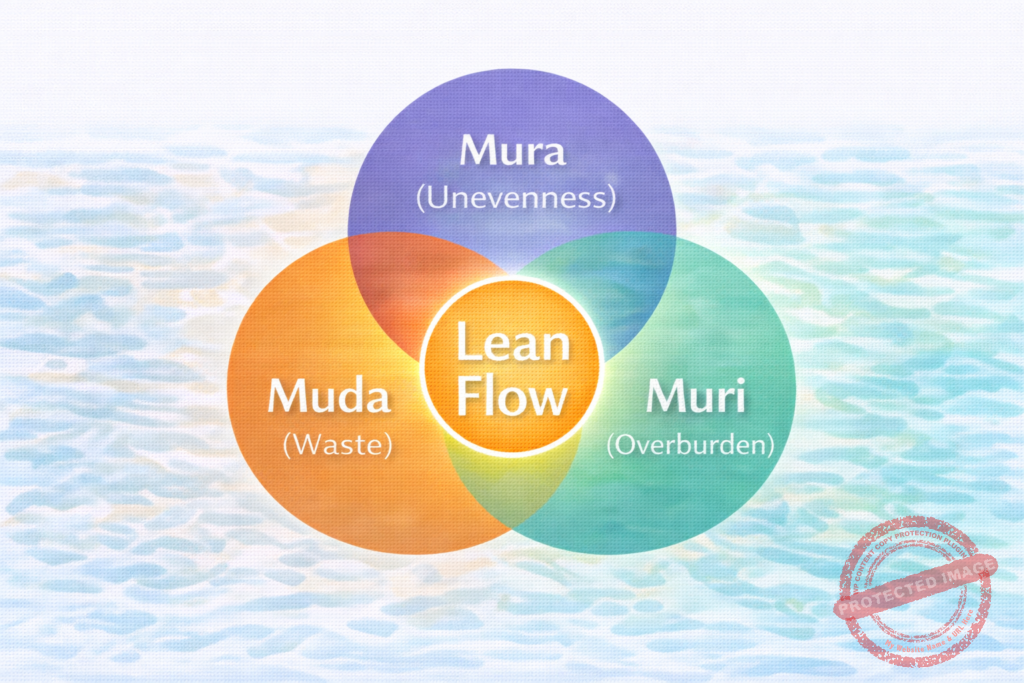
Lean excellence requires eliminating all three—not just visible waste.
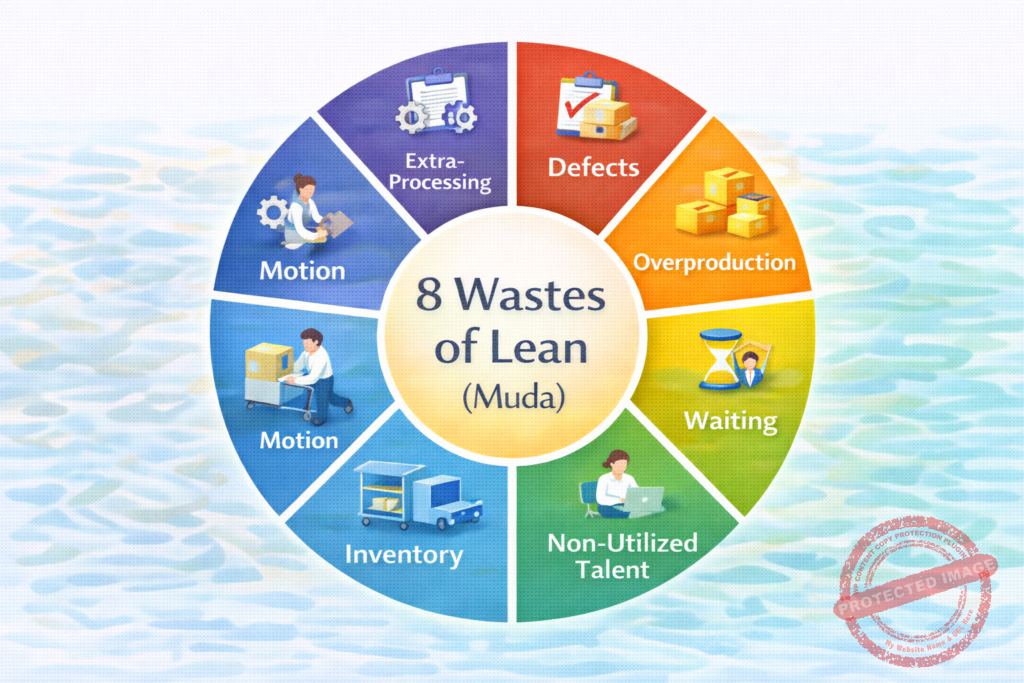
Muda: The 8 Wastes That Drain Value
Muda includes the classic 8 wastes: Defects, Overproduction, Waiting, Non-utilized talent, Transportation, Inventory, Motion, Extra-processing. Eliminating Muda improves speed and cost—but without stabilizing flow (Mura) and capacity (Muri), waste returns.
How to spot Muda:
- Long queues and waiting
- Rework loops
- Excess inventory
- Unnecessary approvals
Tools to reduce Muda: Value Stream Mapping (VSM), 5S, Kaizen, Standard Work.
Mura: The Hidden Enemy of Flow (Unevenness)
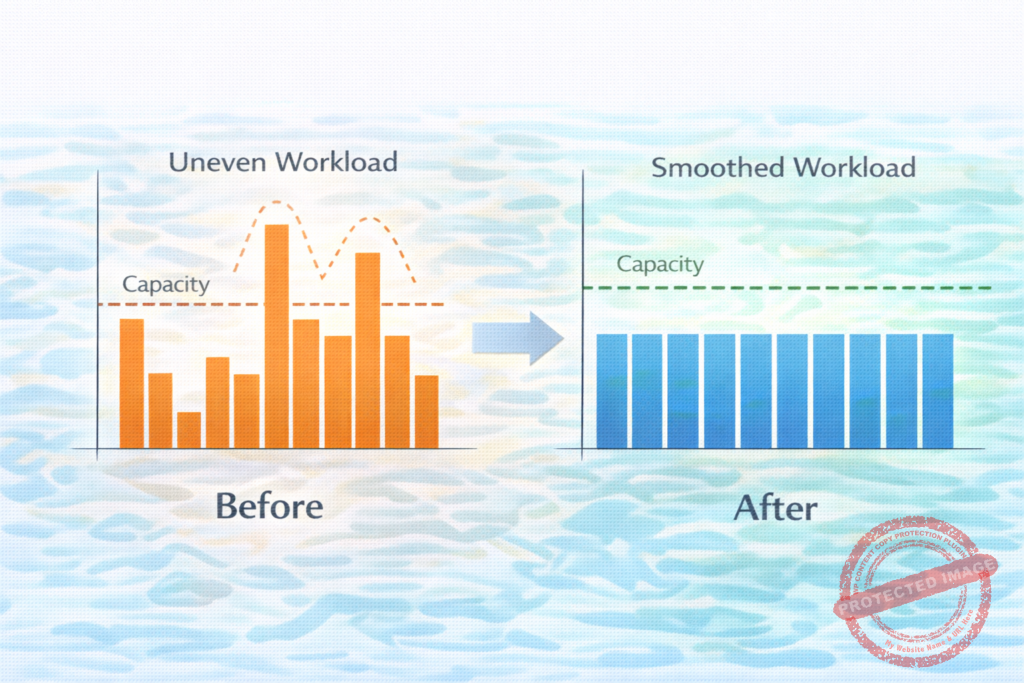
Mura is variability—peaks and troughs in demand, staffing, or workload. Mura creates firefighting, missed SLAs, and stress. It also creates Muri (overburden) and creates Muda (waste).
Examples:
- Month-end spikes in orders
- Uneven ticket volumes by shift
- Batch releases causing queue build-ups
How to reduce Mura: Heijunka (level loading), demand smoothing, smaller batch sizes, better forecasting.
Muri: Overburden That Breaks Systems and People
Muri happens when capacity is ignored: unrealistic targets, chronic overtime, machines run beyond limits. Overburden causes burnout, breakdowns, quality escapes—and more Muda.
Examples:
- Chronic overtime
- Overloaded machines
- Too many tasks for one role
How to reduce Muri: Capacity planning, takt time alignment, WIP limits, cross-training.
Image suggestion:
Overburdened worker/machine vs balanced workload.
Alt text: Reducing overburden (Muri) with capacity alignment.
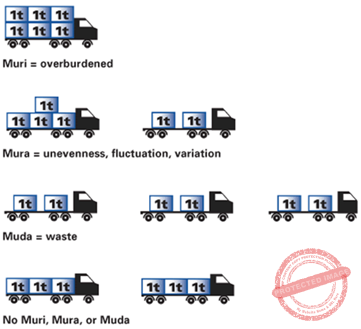
The Truck Loading Analogy (Simple Way to Understand 3M)
Toyota often explains 3M using a truck capacity example:
- Muri: Overloading one truck beyond capacity
- Mura: Uneven loading across trucks
- Muda: Using too many trucks under capacity
- Ideal: Two trucks loaded to capacity—no waste, no unevenness, no overburden
3M in Action Across Industries
Manufacturing:
- Muda: Rework, excess inventory
- Mura: Batch spikes
- Muri: Overloaded lines
IT & ITES:
- Muda: Ticket rework
- Mura: Peak-hour spikes
- Muri: Night-shift overload
Healthcare:
- Muda: Waiting times
- Mura: OPD rush hours
- Muri: Staff burnout
Final Takeaway: Eliminate All Three to Achieve Flow
Lean excellence is not about removing visible waste alone. Sustainable performance comes from eliminating Muda (waste), Mura (unevenness), and Muri (overburden) together—creating smooth flow, predictable delivery, and healthier work systems.
#Toyota3M #LeanManagement #Muda #Mura #Muri #ToyotaProductionSystem #TPS #ContinuousImprovement #OperationalExcellence #ProcessImprovement #WasteReduction #Kaizen #LeanSixSigma #ManufacturingExcellence #BusinessExcellence #QualityManagement #Efficiency #Productivity #LeanThinking #ProcessOptimization

