
Introduction:
The gas distribution industry is critical to modern economies, supplying energy to homes, businesses, and industries. In this sector, reliability, safety, and operational efficiency are not optional — they are essential.
Gas distribution operations are inherently complex. Organizations manage pipelines, storage facilities, filling stations, delivery logistics, safety systems, and customer service functions. These interconnected processes involve multiple handoffs, strict regulations, and significant operational risks.
In such environments, even minor inefficiencies can escalate into major challenges. Delays in cylinder filling disrupt delivery schedules, poor maintenance increases equipment downtime, and weak inventory practices lead to shortages or excess costs.
Many of these problems arise from hidden inefficiencies in everyday operations — waiting for approvals, searching for tools, rework, and excessive paperwork. Over time, these inefficiencies accumulate, affecting productivity, cost structures, and service reliability.
Understanding the Gas Distribution Ecosystem
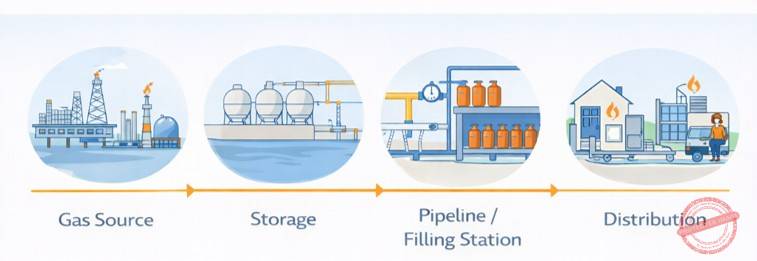
Gas distribution is a complex, multi-layered system requiring coordination across infrastructure, workforce, technology, and regulatory oversight.
At a high level, the value chain includes:
Supply and Storage
Gas is sourced from suppliers and stored in dedicated facilities before distribution.
Transportation and Pipeline Networks
Pipelines, regulators, and monitoring systems ensure safe and efficient gas flow.
Cylinder Filling and Bottling (LPG)
Gas is filled into cylinders at specialized plants for customer distribution.
Logistics and Distribution
Operations include route planning, vehicle management, and coordination with distributors.
Customer Connections and Service
Companies manage new connections, service requests, billing, and complaints.
Maintenance and Safety Monitoring
Regular inspections and maintenance ensure asset reliability and regulatory compliance.
Operational Challenges in Gas Utilities
Gas distribution organizations face a unique set of operational challenges that require careful management
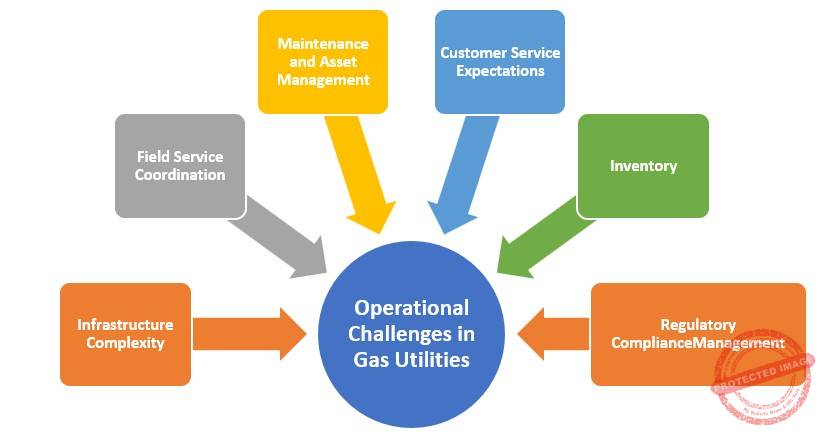
Infrastructure Complexity
Gas utilities manage extensive networks of pipelines, compressors, valves, regulators, and storage facilities. Asset maintenance requires careful planning, and unexpected failures can disrupt supply and create safety risks.
Field Service Coordination
Technicians handle inspections, maintenance, repairs, and emergency response. Inefficient dispatch systems or unclear procedures often delay service delivery.
Maintenance and Asset Management
Reactive maintenance—repairing equipment only after failure—leads to increased downtime and higher operational risk.
Customer Service Expectations
Customers expect reliable supply and timely service. Delays in connections or complaint resolution reduce satisfaction.
Inventory Management
Spare parts, cylinders, and tools require careful control. Excess inventory blocks capital, while shortages delay maintenance and operations.
Regulatory Compliance
Strict regulations demand detailed documentation, safety inspections, and compliance reporting.
These challenges create operational complexity where inefficiencies remain hidden in daily processes.
Lean thinking provides a structured approach to identify and eliminate these inefficiencies.
Introduction to Lean Thinking
Lean thinking addresses operational challenges by focusing on one central idea: maximizing customer value while eliminating waste.
Originating from the Toyota Production System, Lean has evolved into a globally recognized management approach for improving efficiency across industries, including manufacturing, logistics, healthcare, and energy utilities.
In Lean terminology, waste refers to activities that consume resources without adding customer value. In many organizations, a significant portion of daily work consists of such non-value activities.
For gas distribution companies, Lean provides a structured framework to streamline operations, eliminate inefficiencies, and build a culture of continuous improvement — enhancing operational reliability while maintaining high standards of safety and compliance
Lean identifies eight common types of waste:
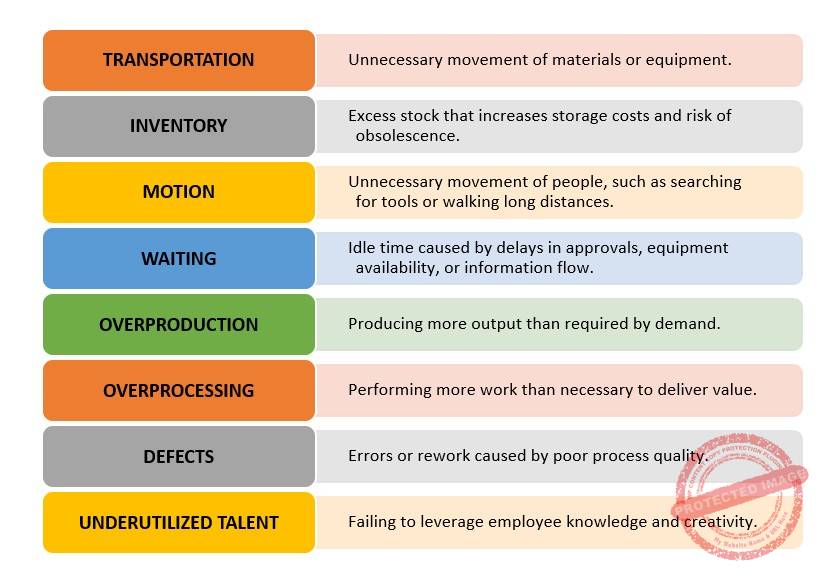
In gas distribution operations, these wastes may appear in various forms:
- Waiting time during cylinder filling operations
- Excess spare parts inventory in maintenance warehouses
- Repeated paperwork during safety inspections
- Long travel distances for field technicians
By systematically identifying and eliminating these wastes, organizations can significantly improve operational efficiency.
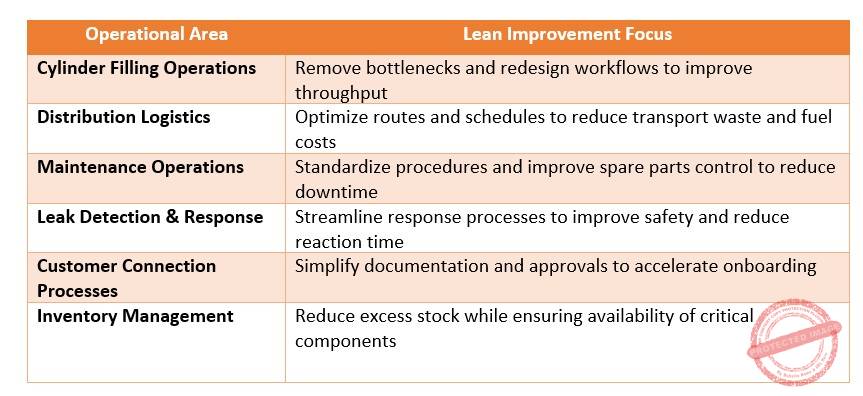
Lean Improvement Opportunities in Gas Distribution
Lean thinking can unlock significant improvement opportunities across various operational areas.
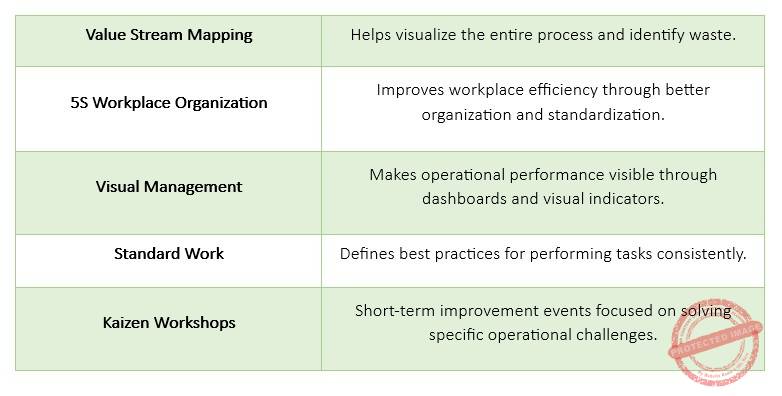
Lean Tools for Gas Utilities
Several practical Lean tools can support improvement initiatives.
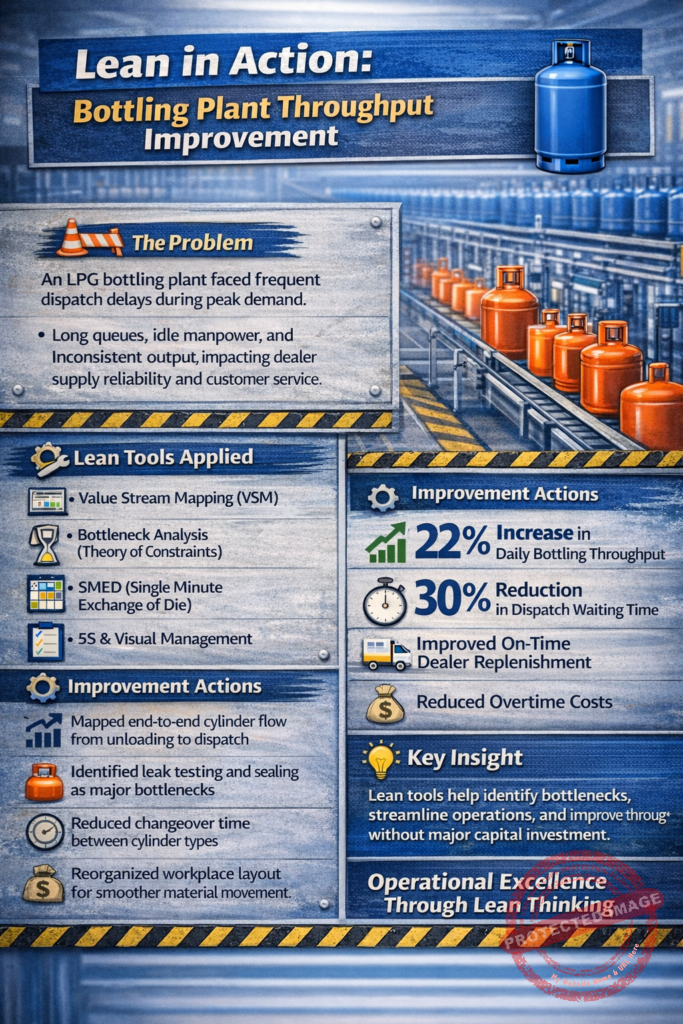
Case Study 1 – Bottling Plant Throughput Improvement
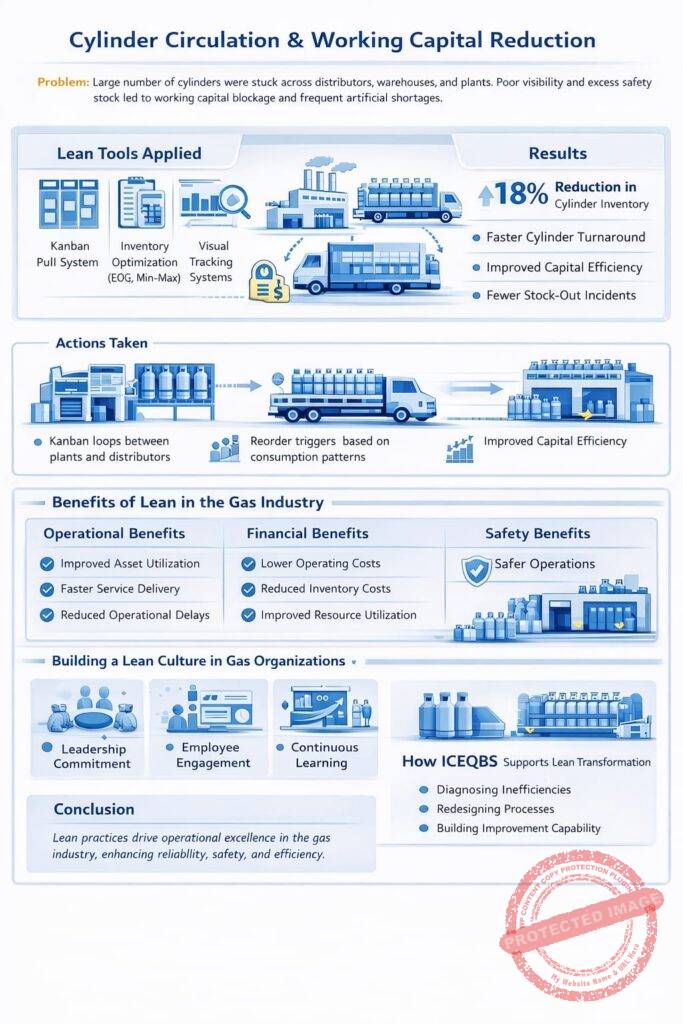
Case Study 2 – Cylinder Circulation & Working Capital Reduction
More Blogs

